
Choosing the right surveillance system is a crucial decision for businesses and homeowners alike. With rapid advancements in security technology, the debate between Analog Camera Vs. IP cameras has become more relevant than ever. Each system has its own strengths, limitations, and ideal use cases.
At wineyard, we help clients make informed decisions by offering expert guidance and customized surveillance solutions. Whether you are upgrading an existing system or installing a new one, understanding the difference between these two technologies is essential.
Understanding Analog Camera Vs. IP Camera
Before diving into comparisons, it’s important to understand how each system works.
What Is an Analog Camera?
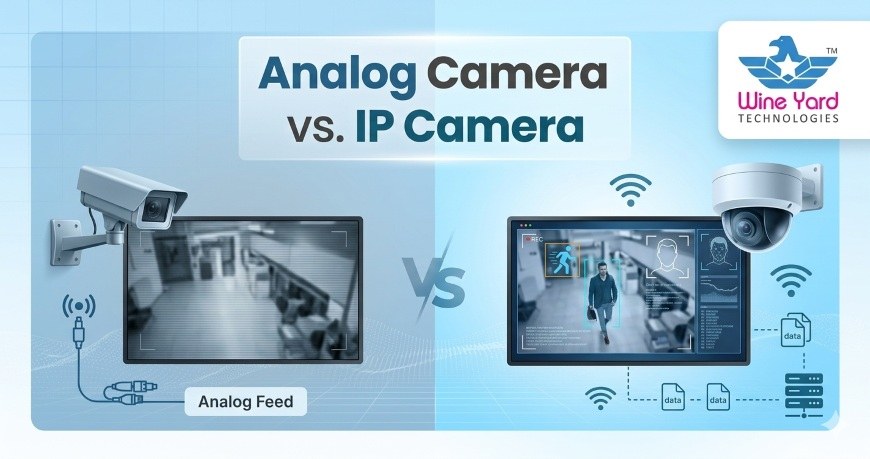
An analog camera captures video and sends it as a continuous signal to a digital video recorder (DVR). These cameras are widely used in traditional surveillance setups due to their simplicity and affordability.
What Is an IP Camera?
An IP (Internet Protocol) camera captures and transmits video data over a network. It connects directly to the internet or a local network, allowing remote access and advanced features.
When comparing Analog Camera Vs. IP Camera, the main difference lies in how video data is transmitted and processed.
Key Differences Between Analog Camera Vs. IP Camera
Understanding the core differences helps you select the right system for your needs.
Video Quality and Resolution
Analog Camera Vs. The IP Camera shows a clear distinction in video quality. Analog cameras typically offer lower resolution, while IP cameras provide high-definition and even 4K video clarity.
Installation and Setup
Analog systems require coaxial cables and DVRs, making installation slightly more complex. IP cameras use network cables or WiFi, allowing easier and more flexible installation.
Remote Access and Monitoring
IP cameras excel in remote monitoring. With Analog Camera Vs. IP cameras and IP systems allow users to access live footage via smartphones or computers, while analog systems have limited remote capabilities.
Scalability
Expanding an analog system can be challenging due to wiring limitations. IP systems are highly scalable, making it easy to add more cameras as needed.
Cost Considerations
Analog cameras are generally more affordable up front. However, IP cameras offer better long-term value due to advanced features and higher efficiency.
Advantages of Analog Camera Systems
Despite newer technologies, analog cameras still have their place in the market.
Cost-Effective Solution
Analog systems are budget-friendly, making them ideal for small businesses or basic surveillance needs.
Simple Technology
They are easy to use and require minimal technical knowledge for operation.
Reliable Performance
Analog cameras provide stable performance without relying heavily on internet connectivity.
For those looking for basic monitoring, Analog Camera Vs. IP camera often leans toward analog as a practical entry-level solution.
Advantages of IP Camera Systems
IP cameras represent the future of surveillance technology.
High-Resolution Video
One of the biggest benefits of Analog Camera vs. IP cameras is the superior image quality offered by IP cameras.
Remote Accessibility
Users can monitor their property from anywhere, making IP cameras ideal for modern businesses.
Advanced Features
Features such as motion detection, facial recognition, and AI-based analytics enhance security capabilities.
Easy Integration
IP cameras can integrate with other smart systems, creating a comprehensive security network.
At wineyard, we often recommend IP cameras for clients seeking advanced and scalable solutions.
Choosing Between Analog Cameras Vs. IP Camera
Selecting the right system depends on your specific requirements.
Budget
If cost is a primary concern, analog systems are a good starting point. However, investing in IP cameras can provide long-term benefits.
Security Needs
High-security environments benefit more from IP cameras due to their advanced features and better image quality.
Installation Environment
For large or complex spaces, IP cameras offer flexibility and scalability.
Future Expansion
If you plan to expand your system, IP cameras are the better choice.
Understanding Analog Camera Vs. IP camera helps businesses make smarter investments in security.
Use Cases for Analog Camera Vs. IP Camera
When to Choose Analog Cameras
- Small offices or retail shops
- Limited-budget projects
- Basic surveillance requirements
When to Choose IP Cameras
- Large offices or corporate environments
- High-security areas
- Businesses needing remote monitoring
Why Choose wineyard for Your Surveillance Needs
At wineyard, we combine expertise with advanced technology to deliver reliable security solutions.
Customized Solutions
We analyze your needs and recommend the best system based on Analog Camera vs. IP camera comparisons.
Professional Installation
Our team ensures seamless setup and optimal performance.
Ongoing Support
We provide maintenance and support to keep your system running efficiently.
Latest Technology
We stay updated with industry trends to offer cutting-edge surveillance solutions.
Future Trends in Surveillance Technology
The future of analog cameras vs. IP cameras is driven by innovation. IP cameras are rapidly evolving with AI integration, cloud storage, and smart analytics.
Businesses are increasingly adopting IP-based systems due to their flexibility and advanced capabilities. However, analog systems continue to serve as a reliable option for basic security needs.
Conclusion
Choosing the right system depends on your budget, security requirements, and plans. With expert guidance from wineyard, you can select the perfect surveillance solution tailored to your needs.
Looking to upgrade your security system? Contact Wineyard today for expert advice on Analog Camera vs. IP cameras and get a customized solution that fits your business perfectly. Our team is ready to help you build a safer and smarter environment.
Recent Comments